
Sweden
Birka: This is a UNESCO World Heritage Site situated on an island in Lake Mälaren, west of Stockholm, and can only be reached by boat. The journey takes about two hours but is well worth it. Founded in the mid-8th century, Birka was the first proper town to be established in this part of Sweden. The Swedes – or Svíar – had been trading along the coasts of the Baltic Sea for centuries and had begun to expand their trading network into modern-day Russia. It was easy to sail south from Birka towards Denmark, Frisia and present-day Germany and Poland. If you headed east via the Åland archipelago, you could sail down the Finnish coast towards the Baltic countries and into the Russian rivers. Traders from other countries also came to Birka and it would have been a multicultural place.

Birka
Initially, the town had around 700 inhabitants and the houses were arranged in semi-circles around the bay that formed the harbour. These days absolutely nothing remains of it. There is only a huge meadow and the glittering bay where once long thin jetties teemed with life as people bustled back and forth loading and unloading the ships that were moored alongside them. Now the island contains a museum where visitors can view a scale model of Birka as it would have looked in the 9th century. It’s beautifully done and absolutely fascinating!
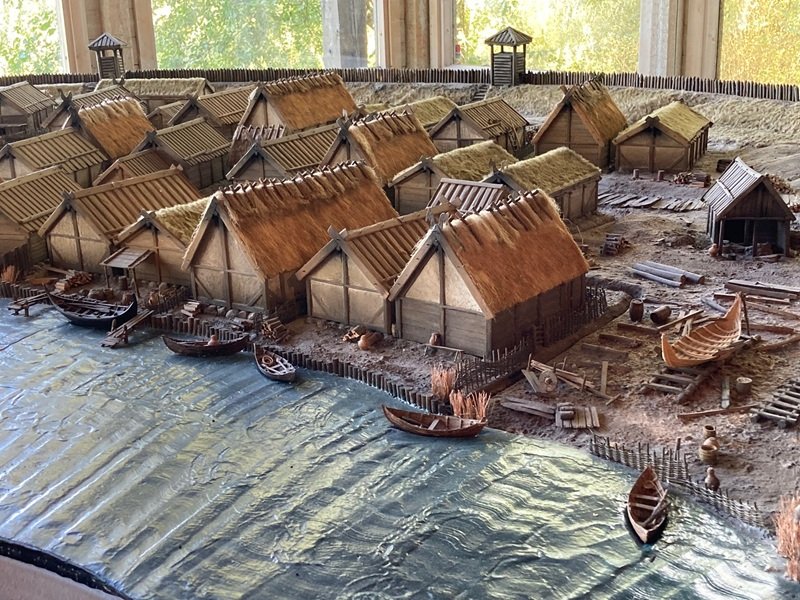
Birka
Sigtuna: Birka had ceased to exist entirely by around AD 970, although it’s not quite clear why. It is possible that it was attacked by enemy forces, but it could also be because the usual southern route into Lake Mälaren had silted up and ships had to sail a different way and no longer travelled past this island. The king at that time decided to move everything to Sigtuna, on the northern shore of the lake, which became the main trading centre. These days it is a very picturesque town north-west of Stockholm. It was founded in the 10th century and took over as the main trading town when Birka disappeared. It is a lovely place to visit, full of rune stones and with a tiny museum dedicated mostly to the Vikings. It has an “olde-worlde” feel to it that is simply wonderful.
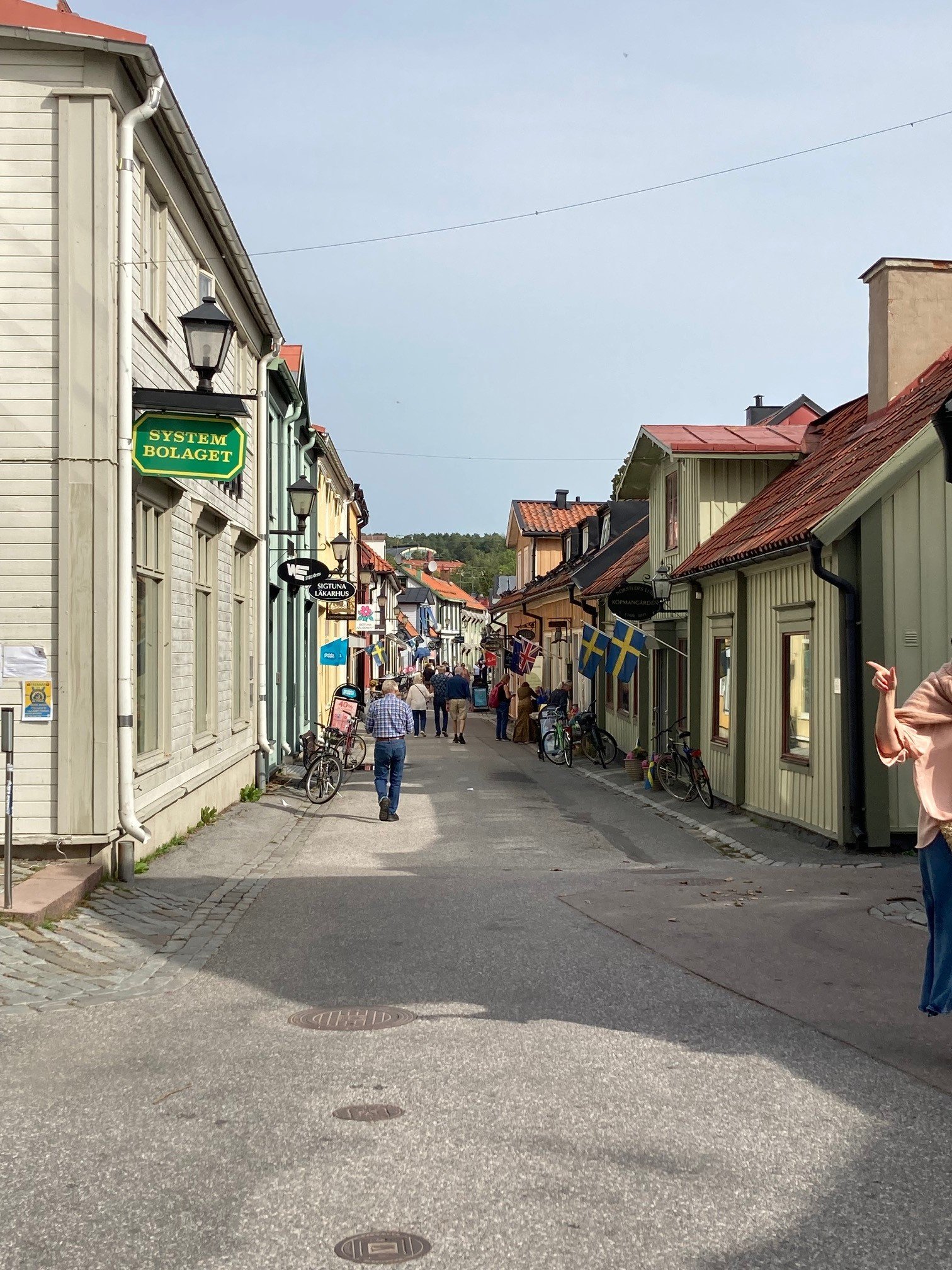
Sigtuna

Sigtuna
The Historical Museum, Stockholm: This is a wonderful place full of Viking artefacts, both in its permanent exhibition and in the so called Gold Room. The latter is a vault underneath the museum that houses incredible amounts of gold and treasures from all around Sweden, a lot of it from Viking times. Among them is a gold ring which my story ECHOES OF THE RUNES was based on, as well as all manner of amazing items. Do go and see it for yourself if you get the chance!
Stockholm Historical Museum
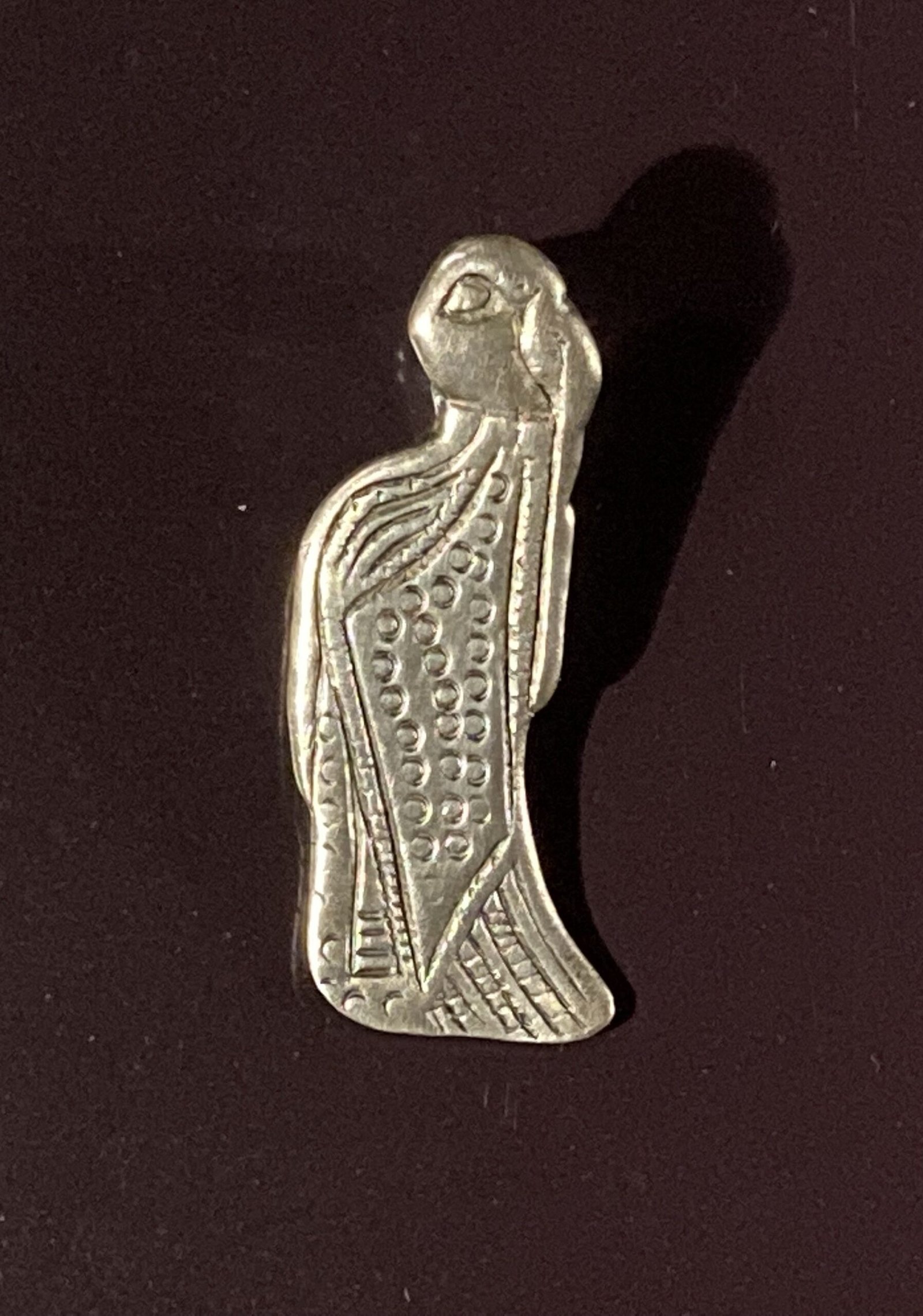
Stockholm Historical Museum
Vikingaliv Museum, Stockholm: A museum that aims to correct some of the misconceptions about Vikings, such as the fact that Viking helmets did not have horns! There are some very interesting displays and lots of useful information.

Vikingaliv Stockholm
Gunnes Gård, Upplands Väsby: This is an open-air museum consisting of a reconstructed Viking age farm from the early 11th century. The name Gunnes Gård simply means Gunne’s Farm and was inspired by a runestone found in the area. The farm buildings are set in a hilly landscape dotted with huge boulders and surrounded by forest on three sides. The whole farm has been recreated based on archaeological finds nearby and shows visitors exactly what life on a late Viking Age farm was like. It features buildings, animals and plants from the 11th century, and is staffed by volunteers wearing authentic Viking style clothing who are very friendly and knowledgeable. The various buildings are furnished with sleeping benches covered in sheepskins and blankets, trestle tables, stools and all the everyday objects and tools a Viking family would have needed. I was able to sit inside the dim interiors soaking up the atmosphere and making a note of the smells and sensations – invaluable for my writing.
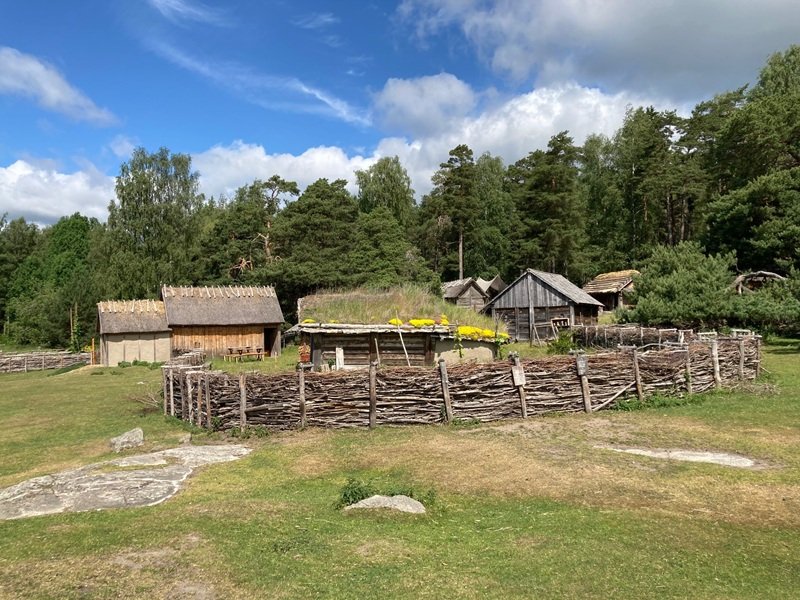
Gunnes Gård
Uppsala: The Viking Age is usually said to start from AD 793 with the first raid on Lindisfarne, but in reality a well-functioning society and almost everything we associate with Vikings was in place long before that date, having been developed during the so-called Dark Ages. The long distance trade links, the raiding (although before AD 793 this was mostly around the Baltic coasts), market places, petty kingdoms, ships and warriors, as well as the way their society was organised. The only thing that changed was their ships – during the Viking Age they learned to make thinner planks, making their vessels lighter, faster and more sea-worthy. Sails were also used to a much greater extent than before, opening up new possibilities for long-distance travel.

Uppsala
Uppsala was an important site during the Viking Age and long before that. A missionary claimed that there was a heathen temple where ceremonies – blōt – were conducted involving sacrifices to the gods, some of them human. (His account might be a little exaggerated but we don’t know for sure). Uppsala was definitely home to a powerful clan, perhaps the seat of kings, and on the outskirts of the present-day town there are three enormous grave mounds from the Dark Ages called the Royal Mounds, as well as a museum. Among other things, this housed a Dark Age helmet found nearby in the village of Valsgärde which is very similar to the famous one from Sutton Hoo. Very impressive!
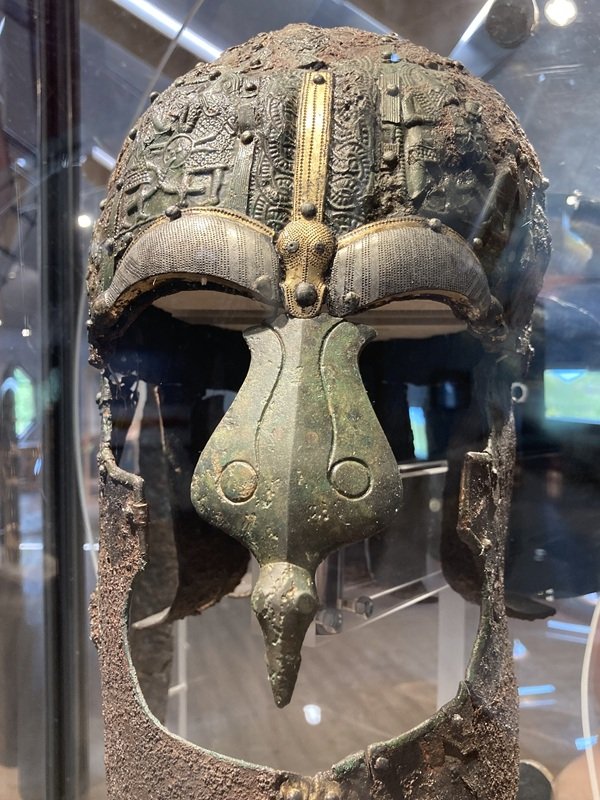
Uppsala
Foteviken: Situated on the southern-most tip of Sweden in the county of Skåne is this outdoor museum with reconstructed Viking houses and craftsmen plying their ancient trades. Here I chatted to a blacksmith – who let me hold a Viking axe, very exciting! – and a man carving beautiful objects of bone. I tried my hand at using a quern stone – incredibly heavy – and took copious notes. Great place for research!
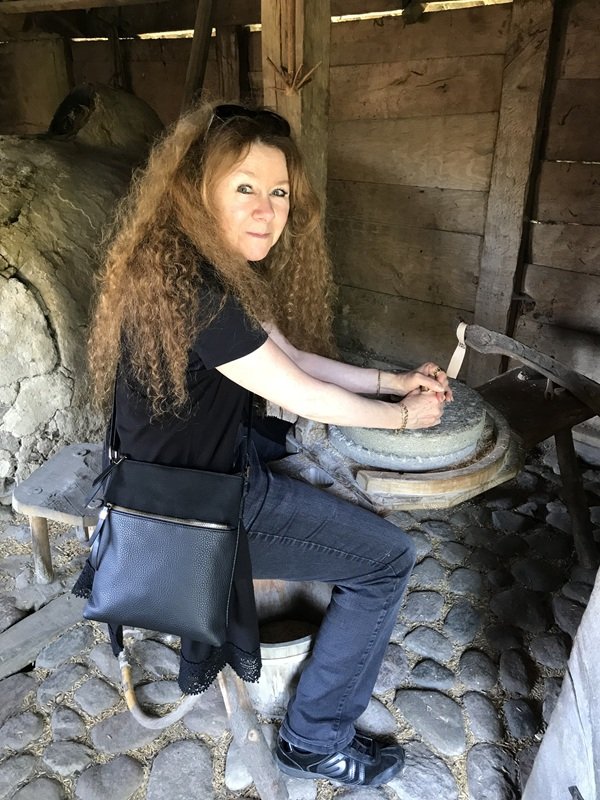
Foteviken
Köpingsvik, Öland: A beach on the west coast of this island outside Sweden’s east coast where the Vikings stopped to trade with each other. About a kilometre in length, this beautiful beach of soft silver-white sand and shallow water curves round to create a sheltered bay. It was the perfect place to pull up longships and set up trading stalls.

Köpingsvik
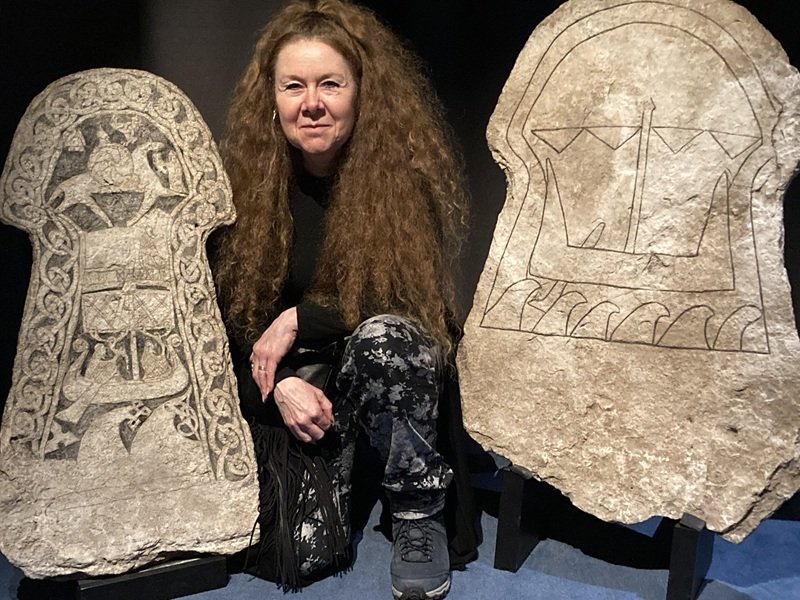
Gotland Museum, Visby: In the town of Visby on the island of Gotland (further east off the coast of Sweden next to Öland) this museum houses one of the most impressive collections of runestones anywhere. An entire room full, all of them intriguing and eye-catching. There are also treasures from on the island as it’s the Swedish province with the largest number of buried hoards. Literally kilograms of silver have been found here – amazing!
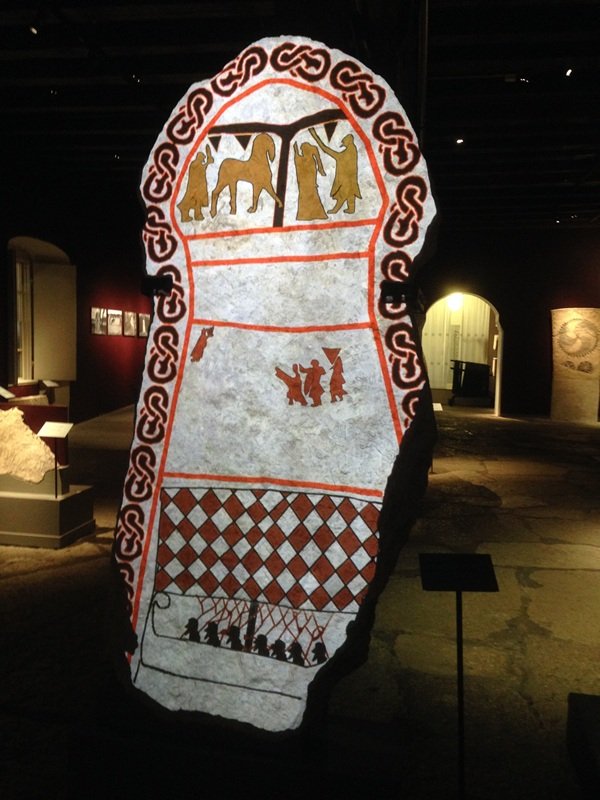
Gotland Museum