
Iceland
This massive island in the North Atlantic was more or less empty before the Vikings arrived to settle there around AD 860-870. My story TEMPTED BY THE RUNES takes place in AD 875 with my characters as part of those first groups of settlers.
The Settlement Museum, Reykjavik: This houses the actual remains of a Viking longhouse dug up underneath the building. Visitors go down into the basement to see it and there are displays describing how it would have looked back in AD 870 – fascinating! Originally, it would have been built of turf and was big enough to house at least 10 people. The archaeologists think it might have belonged to one of the first Viking settlers, Ingólfur Arnarsson, and his wife Hallveig, and there was lots of information, as well as objects found around the site. Reykjavik had a good natural harbour, great conditions for cultivating grain crops and plenty of other natural resources so was an ideal place to settle.
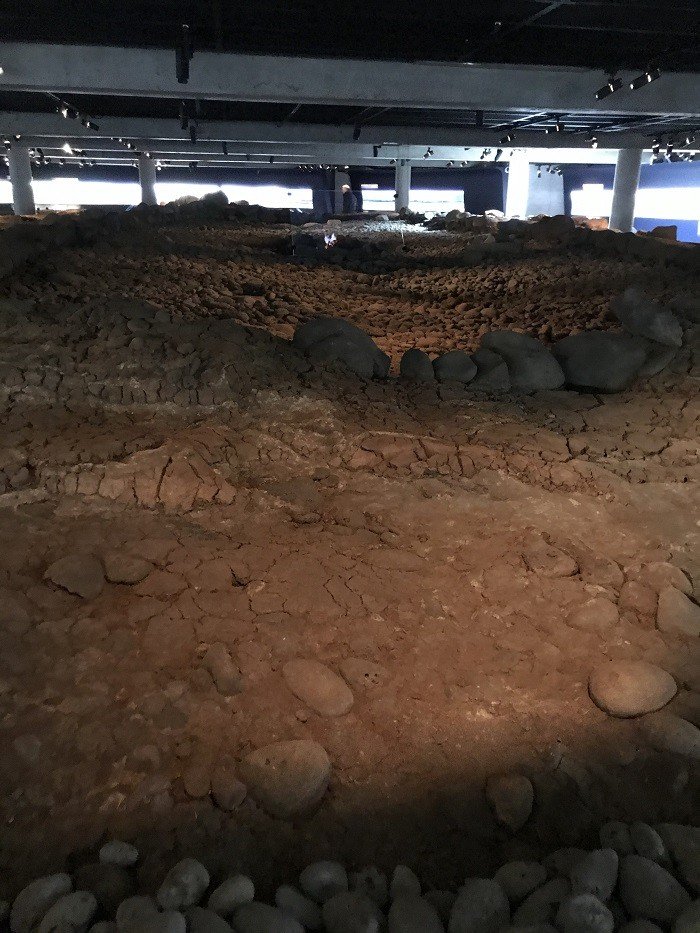
Settlement Museum Iceland
The National Museum of Iceland, Reykjavik: This traces the country’s history from those first settlers to the present. There were some very interesting artefacts, including an original manuscript of the Norse sagas, old textiles like a mitten, and a wicked looking fish fork for use when fishing for salmon in the rivers.
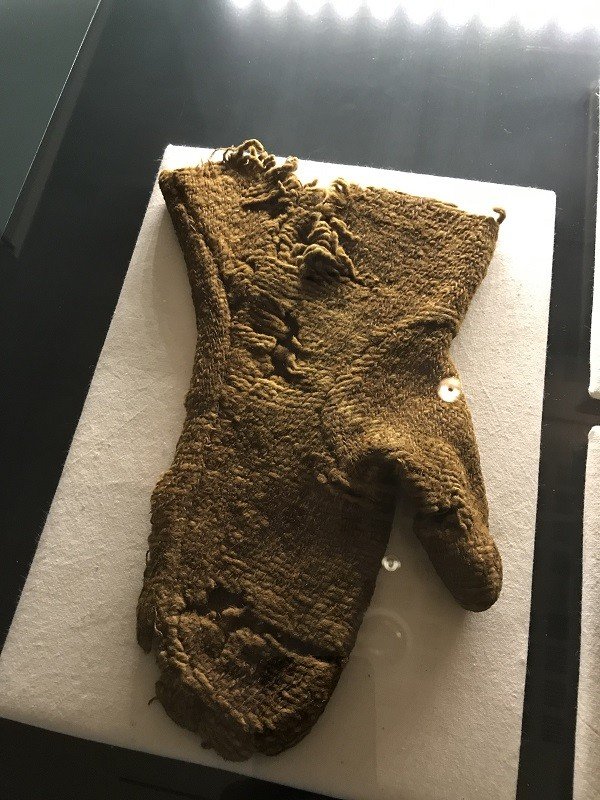
National museum Iceland
Eiriksstaðir, Haukadalur: A reconstructed turf longhouse built on the site where Eirik the Red actually lived in the 10th century (he was the father of Leif Eiriksson, the Viking who discovered America). This sort of house was exactly the kind my characters would live in, and I was able to sit inside and soak up the atmosphere so that I could really get a feel for what it was like. There were very few trees on the island so the Vikings who made their home there had to use turf as the primary building material. These houses are curious buildings – humpbacked and a bit like little hillocks in the landscape. The roof and sides are covered in grass, the walls are thick – usually two layers of turf with soil or sand in between – built around a timber frame, and with a large hearth in the centre of the earth floor. The inhabitants would have been very warm and cosy in there, although cramped as they had to spend most of the winter indoors. Around the walls are benches to sit and sleep on, with straw and lots of furs to make them more comfortable. I was able to put my hands on the turf walls to feel how soft and dry they were, if a bit dusty, and to notice that the house wasn’t damp. Eirik himself eventually left and discovered Greenland, where he settled.
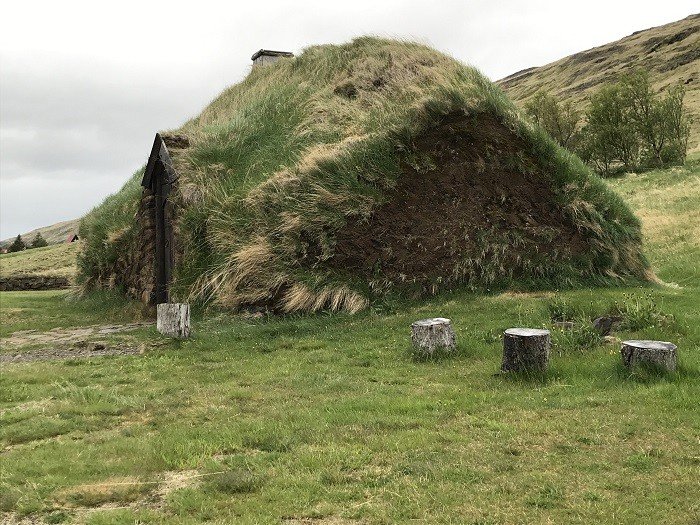
Eiriksstaðir
Thingvellir (Þingvellir): The place where the Vikings held their annual meetings (Alþingi) to dispense justice and decide on laws. It’s a natural rock formation, a bit like a canyon with an amazing waterfall – Öxarárfoss – on one side. In a spectacular setting up on a hill overlooking a huge lake nearby, the waterfall came as a complete surprise. It’s hidden away among the rock formations that form two curtain walls, like fortifications on a castle. Views over the surrounding landscape are out of this world. There is a large grassy plateau below, where the Vikings taking part in the Alþingi would have raised their tents and camped out. When we were there, the place was incredibly windy and I nearly froze to death as the rocks acted like a wind tunnel. It was so cold!
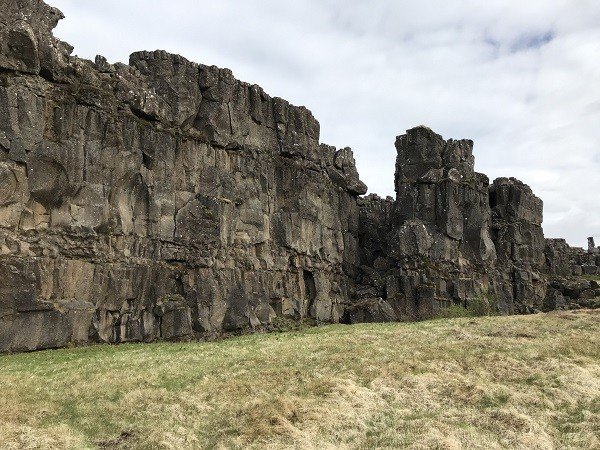
Thingvellir
Stöng, Þjórsárdalur: An archaeological dig site where a Viking longhouse had been found buried under lava. It is believed to have been abandoned in AD 1104 due to a volcanic eruption of nearby Mt Hekla. In 1939 a farmstead was excavated here by a team of archaeologists who uncovered the farmhouse itself, a cattle shed and a smithy. A protective structure was built over the site in the 1950s and that is still in place today. You can go inside and walk around the stone foundations, visualising how it would have looked. A great Viking is supposed to have lived here – Gaukur Trandilsson, who is mentioned in the famous Icelandic saga, Njálssaga, as one of the biggest heroes of the Viking era. Unfortunately the manuscript of the Gaukssaga is lost, but on a rune stone at Maeshowe in Orkney there is an inscription that says Gaukur was here – Viking graffiti. Coincidence?
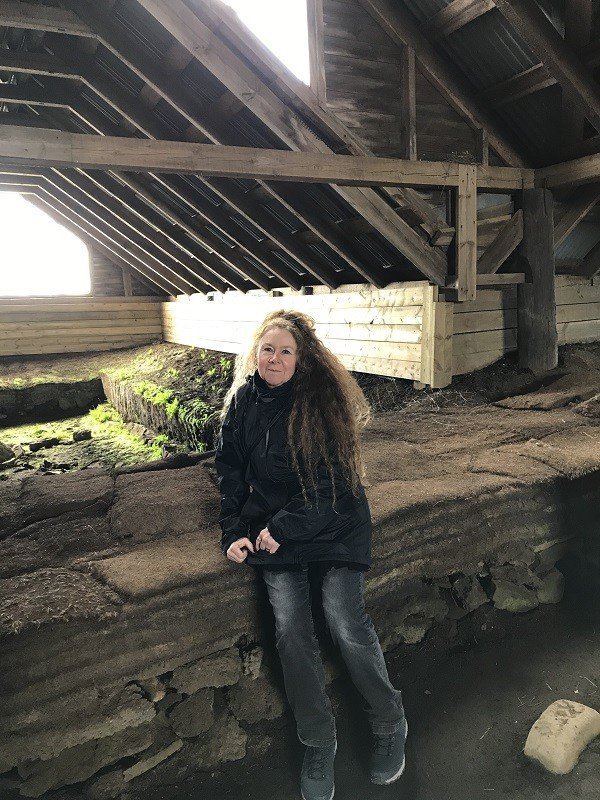
Stöng
Njarðvik Museum: This contains a replica longship of the kind used by the settlers. Named Islendingur (Icelander), it had been built in the year 2000 by Gunnar Marel Eggertsson, a shipbuilder like his father and grandfather, who was related to the famous Leif Eiriksson through his mother. He and a crew sailed the ship to America to commemorate Leif’s journey and to prove that it could be done. It is absolutely huge (23 x 5.5 metres at the widest point) and it had to be as the settlers brought cattle and provisions etc for their new life. I was ecstatic at being allowed to sit on board and just see how it felt. Again, perfect for my story.
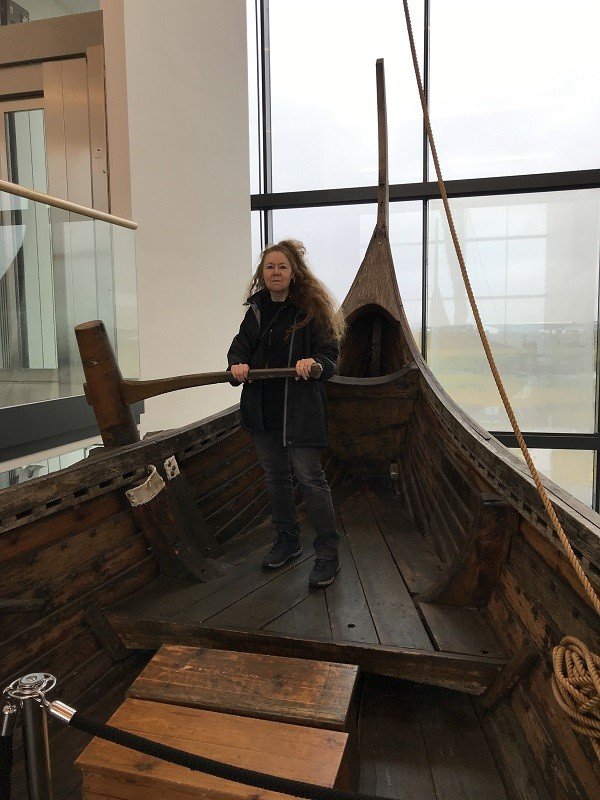
Njarðvik Museum