
Germany
Haithabu, Busdorf: Vikings didn’t live in towns for the most part, but in isolated farmsteads and estates or settlements consisting of a few farms close to each other. The only exceptions were the market towns established initially for the sole purpose of trade. These had to be next to or close to the sea, rivers or lakes as there were hardly any roads at this time. Most long-range travel was done by boat and trading towns sprang up in various places around the Baltic Sea, the largest one being Haithabu (or Heiðabyr in Old Norse).
Haithabu
Although the original town is long gone, there is now an open air museum on the same site, together with a museum of artefacts found during excavations. Haithabu was established by a Danish king and was owned by the Danes, but these days it is in the German town of Busdorf (not far from the Danish border). In Viking times, it was reached via a fjord (or inlet) from the Baltic Sea. The trading town was protected by a semi-circular palisade in the water and a huge earthwork around the town itself. Visitors now can climb up to the top of one part of this rampart to look down on the flat area where Haithabu was situated.
Haithabu
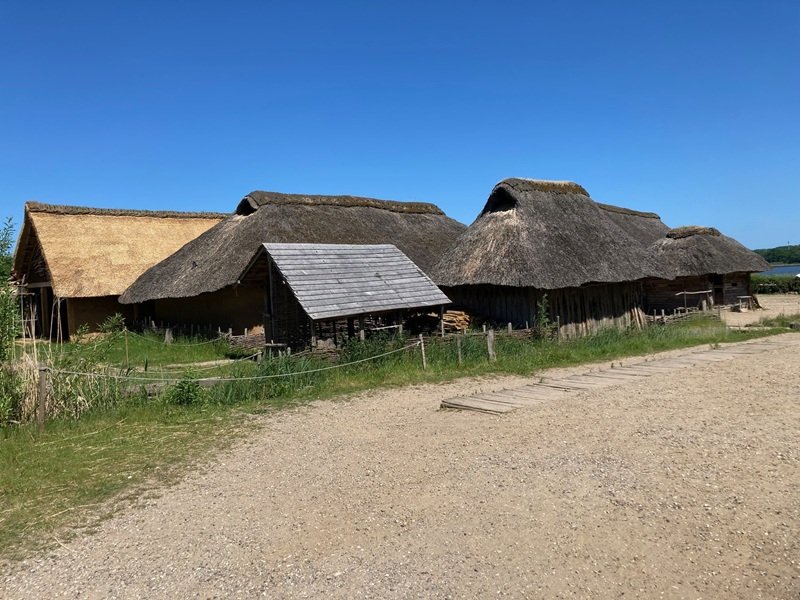
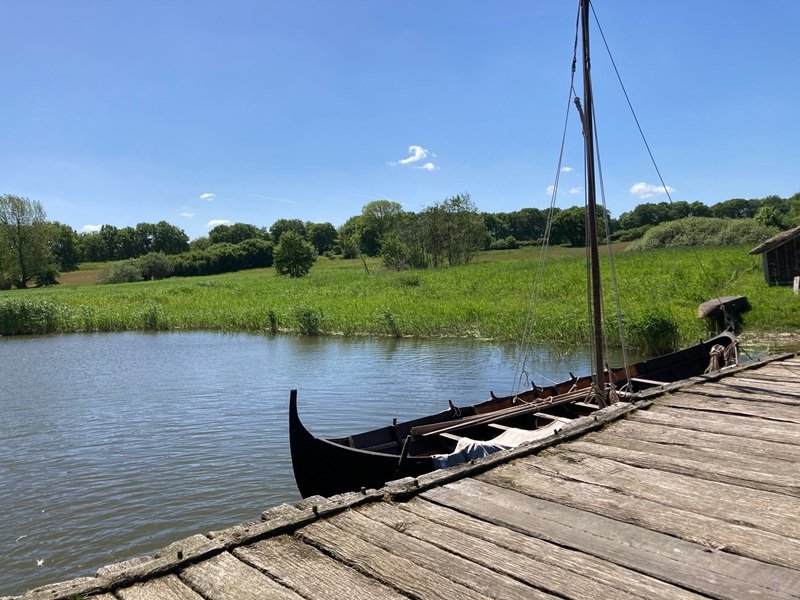
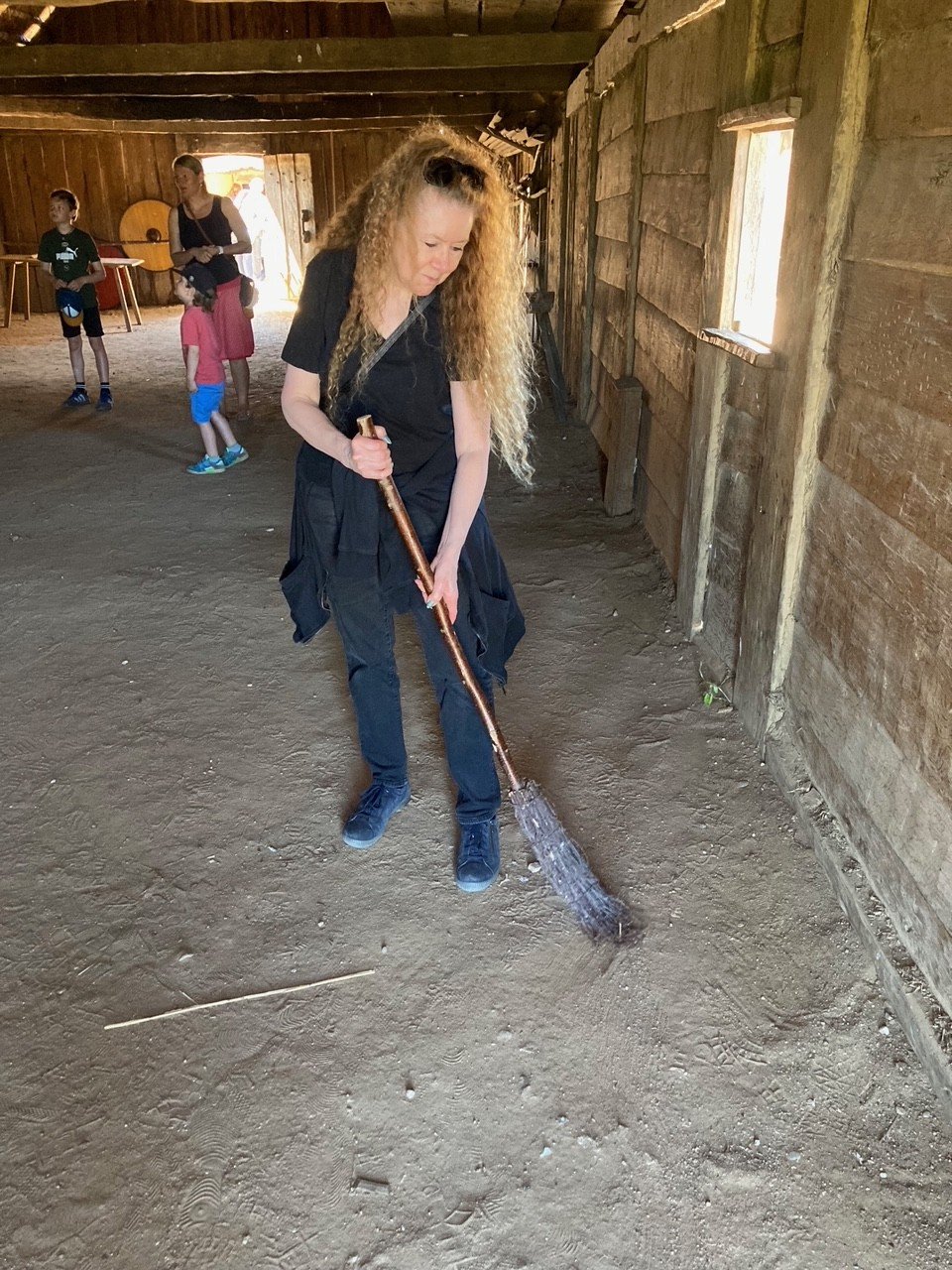
A small village of reconstructed houses has been built on the site and you can enter each one. They are made of wattle and daub, with thickly thatched roofs. All the pathways between the buildings are covered with rough planks which was exactly the way it would have been a thousand years ago. This was necessary in order to keep people from slipping or getting stuck in mud during bad weather. Down by the shore a large jetty has been built, again of very rough planks. In its heyday, Haithabu would have had many such jetties where ships could be moored while trade goods was loaded or unloaded. I loved standing there trying to imagine the hustle and bustle back then. It was lovely!
Haithabu