Denmark
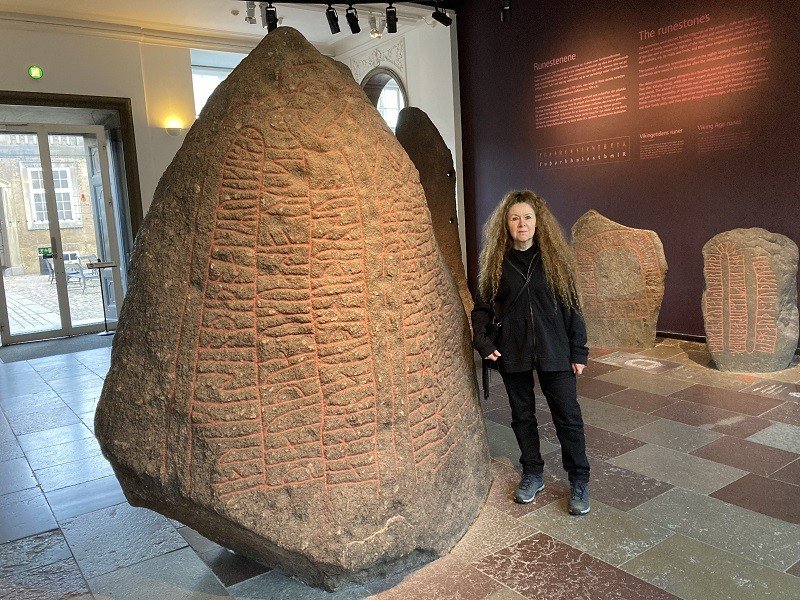
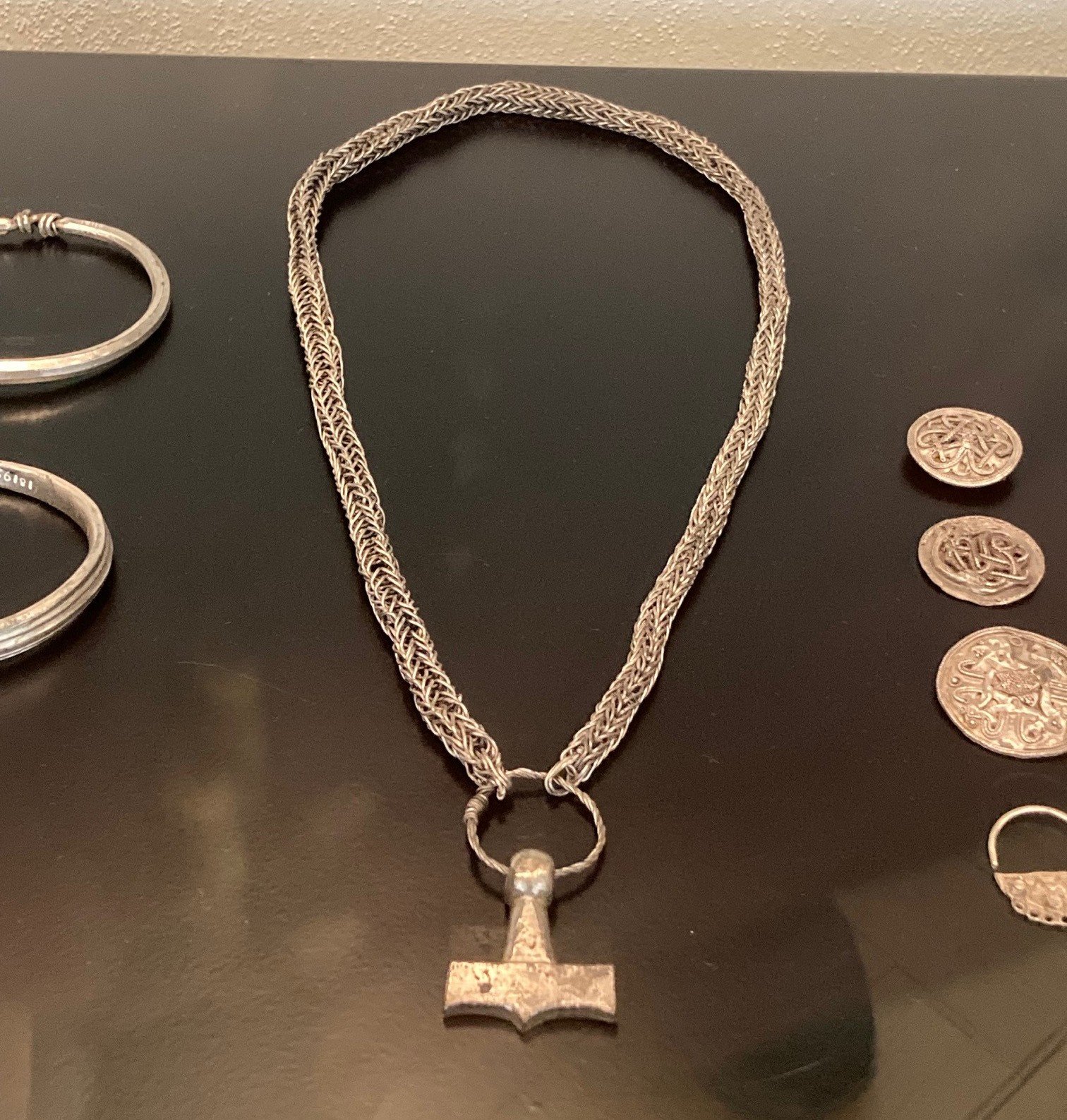
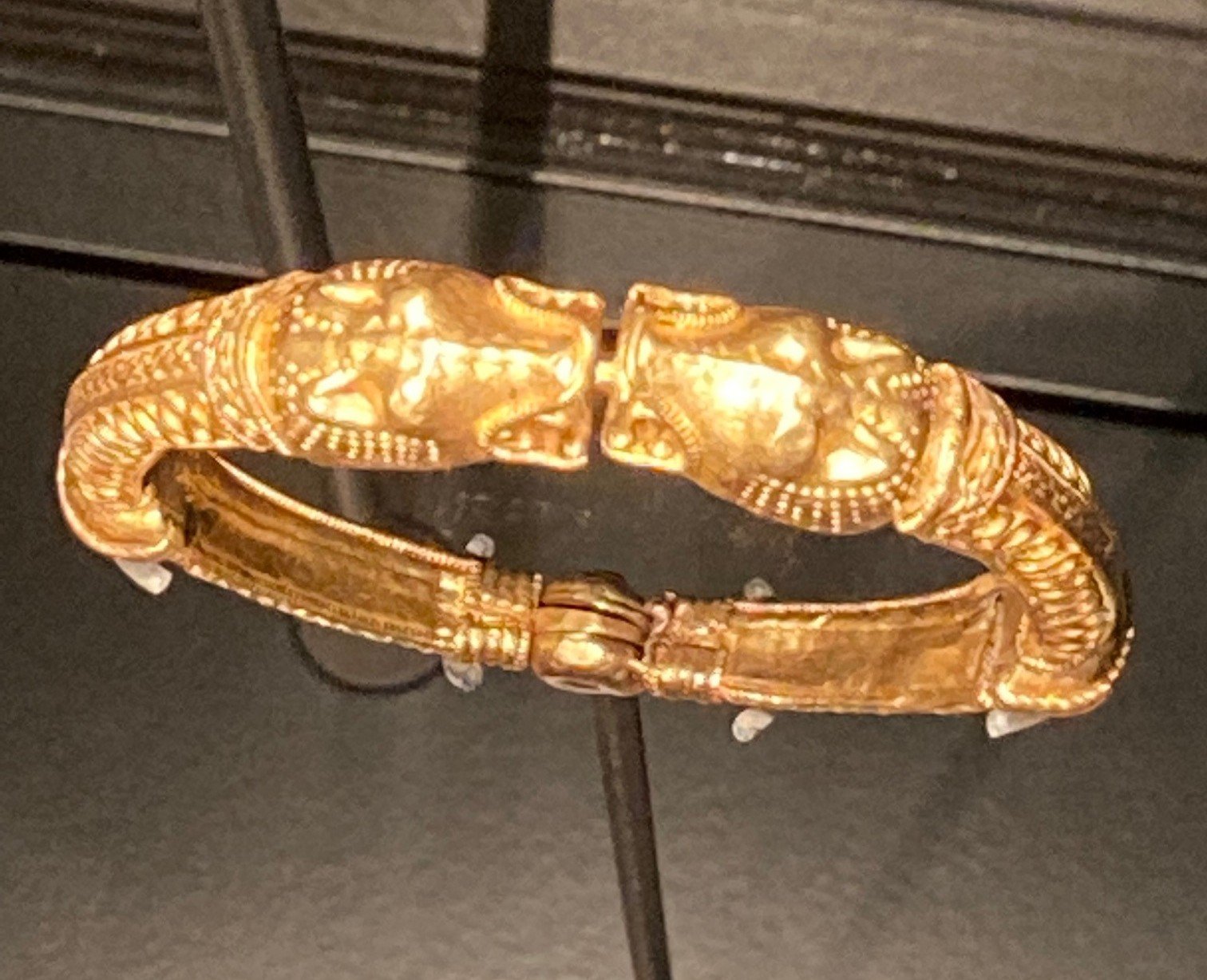
National Museum of Denmark, Copenhagen: This museum in the centre of the Danish capital has a wealth of Viking artefacts, including amazing runestones, and some excellent exhibitions. It’s well worth a visit! Among other things, when I was there they had the skeletons of two individuals who had been found far apart in Denmark and England. DNA testing proved that they were closely related which I found fascinating!
National Museum of Denmark
National Museum of Denmark
National Museum of Denmark
The Viking Ship Museum, Roskilde: This is the place to visit if you want to learn everything there is to know about Viking longships. Not only do they have ships salvaged from the bottom of the nearby harbour, but they also have a boatyard where they build replicas. These are used for trips around the bay – if you are able to row and not afraid to work hard, you can come along for a ride. It’s a fantastic experience, not to be missed! Even if, like me, you’re the kind of person who turns green at the mere sight of a boat, the ship glided through the water extremely smoothly and I didn’t feel the slightest bit sick.
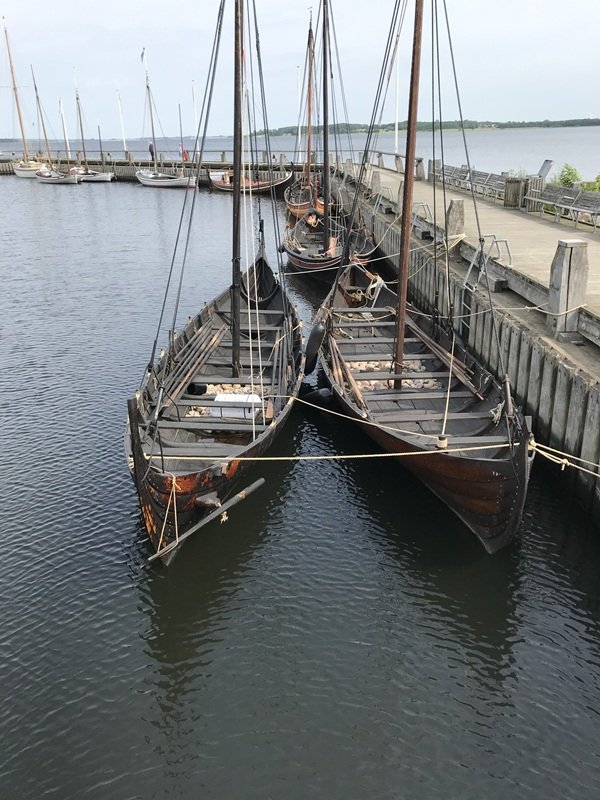
Viking Ship Museum, Roskilde
Ribe Viking Centre: On the westernmost coast of Denmark there is an open-air museum with a reconstructed Viking settlement which is also well worth a visit. I was able to sit inside a longhouse, lie on a bench covered in furs of various kinds, sit in a chieftain’s chair, and watch a range of Viking handicrafts being carried out. There were re-enactors dressed in Viking outfits, and again, craftsmen plying their trades. Actually experiencing the scents and sounds of the place was invaluable. Those are the little details that add real flavour to a story.

Ribe Viking Centre
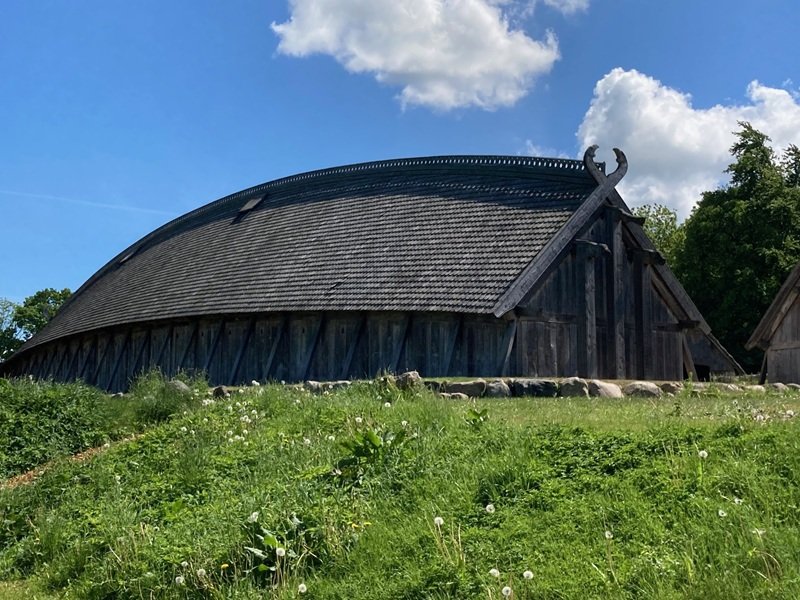
Sagnlandet, Lejre: Another open-air museum with reconstructed buildings, among them a royal Viking hall. It is based on the remains of one found nearby that used to belong to a Viking king, hence the large dimensions. And it is truly majestic, not just in size but in the way it was built and the wonderful decorations. Set at the top of a slope, the building is about 50 metres long and 10 wide, with a slightly curved roof covered in wooden shingles. The gable ends are decorated with snarling beasts and there are rows of posts holding up the roof overhang. Entering the royal hall is like stepping back in time. Double rows of pillars support a soaring roof – at least 10 meters tall – and they would have been painted in bright colours back in Viking times. These would add to other splashes of colour from wall hangings, cushions, painted shields, and possibly weapons decorating the walls. There are rows of benches on either side of the middle aisle. During mealtimes these would have also had trestle tables set up before them. The benches have sheepskins or cushions to sit on. In the centre of the right-hand wall is the special dais for the king and his royal entourage. No ordinary bench for him, but a carved seat with armrests and probably a multitude of soft cushions to sit on. More lovely carvings adorned his chair and the nearby benches – I loved the way the craftsman had carved heads of various creatures like dragons. It gave a feeling of opulence and made it feel special to sit there (yes, of course I had to try it!). I imagined I was attending a feast, sitting at a trestle table, eating and drinking mead. Perfect for inspiration!