
17th Century – Europe and Japan
Scotland
Eilean Donan: I enjoyed all aspects of researching my novel HIGHLAND STORMS because I love Scotland and all things Scottish. It was a great excuse for visiting the Highlands, Urquhart Castle, Eilean Donan and lots of other breath-taking sites. I also got to meet a small herd of Highland cattle owned by a friend of mine. The calves were adorable and some of the bigger animals allowed us to go near and even comb them! (I was a bit wary of those horns though).
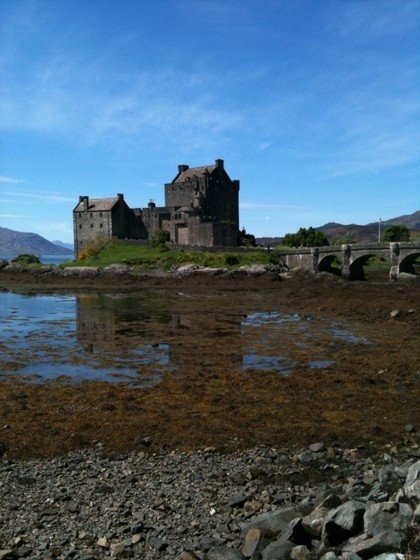
Eilean Donan
Highland Folk Museum, Newtonmore: This open air museum has reconstructed Highland huts where you could sit next to a real peat fire to see what it was like. Brilliant! I would never have realised how much my hair stank of smoke afterwards if I hadn’t done that. Also, how very dark it was inside even in the daytime.

Highland Folk Museum, Newtonmore
Sweden
The Sailing Ship Götheborg: Some years ago, I heard that a replica sailing ship from Sweden had docked at Canary Wharf in London for a few weeks and being curious, I decided to go and take a look. That visit sparked the idea for TRADE WINDS, my first historical novel, so it was serendipitous indeed. The original East Indiaman Götheborg was built in 1738 and made three journeys to China, two of which were very successful. The third one, however, ended in disaster. On 12th September 1745 the ship ran aground just outside Gothenburg, right in front of all those who were waiting expectantly for its return. Fortunately no one was killed and some of the cargo was rescued, but it was still a terrible shame when they were so close to their goal after having been away for more than two years. The investors at the time can’t have been very pleased, but thanks to this accident modern day shipbuilders were able to build a replica. This was done using traditional methods and the same raw materials as the original ship, although the new Götheborg contains modern equipment for navigation, cooking and so on, things a 21st century crew couldn’t do without.
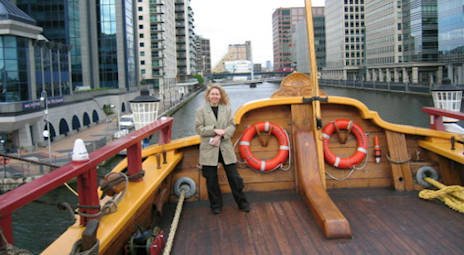
The Gotheborg – on deck
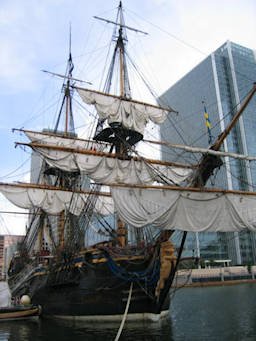
The Gotheborg, West India Dock, London
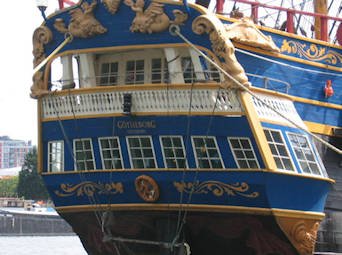
The Gotheborg – stern view
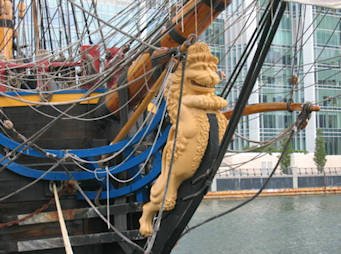
The Gotheborg – figurehead
Japan
Japan is a fascinating country and I feel very lucky to have lived there, albeit only for three years. I have been back many times, though, sometimes for research reasons, other times merely for a holiday. I love everything about Japan – the food, the people, their orderly way of doing everything – and Tokyo is a great place to start. I’m always amazed at the way skyscrapers and modern buildings co-exist happily with traditional places like temples and shrines. You never know what you’re going to encounter next which makes every excursion exciting. The Sensoji Temple at Asakusa is definitely worth a visit, as is the fish market at Tsukiji, Harajuku with all its crazy shops (and shoppers!), as well as Yoyogi and Ueno parks.
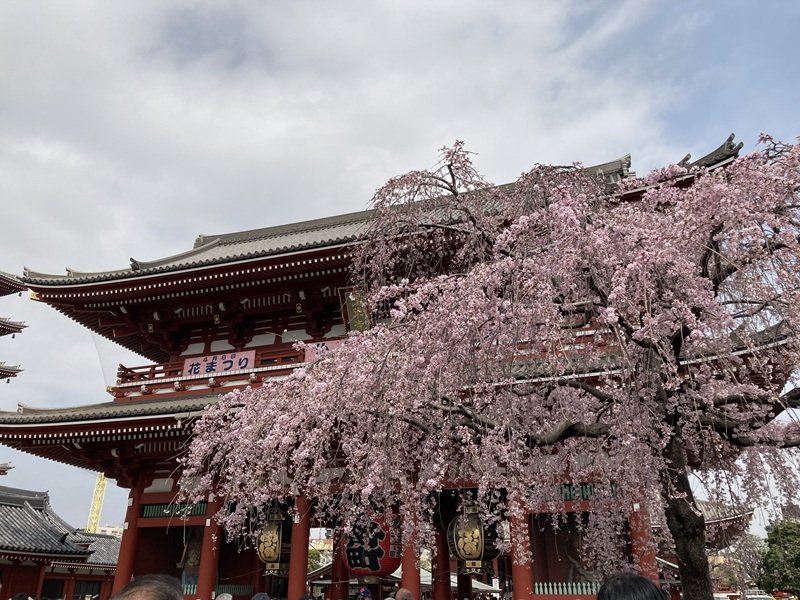
Sensoji temple
Another favourite place of mine is Kyoto, which seems to be an entirely different kind of city. Here the pace of life is slower and one is enveloped by a feeling of “old Japan” and the sense of tradition. Spectacular temples like Kiyomizu-dera high up on the hills overlooking the town and Fushimi Inari on a mountain on the outskirts of Kyoto with literally thousands of big temple gates (torii) along trails leading up to the top of the mountain (all painted a vivid orangey red). Then there is Kinkakuji – the Golden Pavilion set in perfect landscaped gardens is well worth a visit despite all the tourists that throng the paths, as is the old town where real geishas can be seen strolling around. In the centre of Kyoto is Nijo Castle, one of the former homes of the Shogun. This is well worth a visit if only to walk to walk on the so called “nightingale” floor.

Kinkakuji

Kyoto Fushimi Inari
Himeji Castle: I’ve also had the great pleasure of visiting one of the most wonderful castles in all of Japan – Himeji. I felt transported back to the age of the samurai and used it as the home of my hero in THE SCARLET KIMONO. Of course it helped that we timed it just right and our visit coincided with the cherry blossom season. The views were quite literally breathtaking!

Himeji
Dejima, Nagasaki: Dejima is the tiny man-made island near the Nagasaki harbour which features in my stories THE GILDED FAN and THE JADE LIONESS. It was built in the shape of the Shogun’s fan and was the only place the Dutch traders were allowed to stay from 1641 to 1853. They couldn’t so much as set foot on the mainland, which must have been extremely frustrating for them. After having been lost for years due to landfill all around it, the Dejima site has been excavated and some of the original buildings reconstructed in order to show visitors what it used to be like. It was wonderful to see, having read so much about it, and I can thoroughly recommend a visit if you are ever in Nagasaki. In fact, any part of Japan is worth visiting – it’s simply a wonderful country!
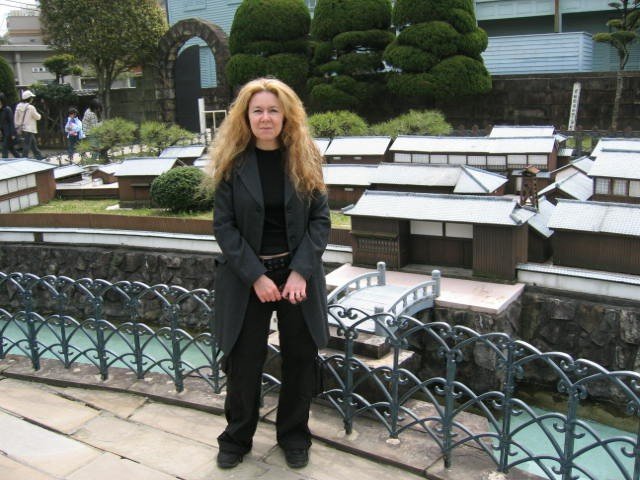
Dejima
Champion Sumo Wrestler Chiyonofuji: Chiyonofuji Mitsugu, the 58th Yokozuna (champion) of Sumo wrestling, nick-named “the Wolf”, was the inspiration for the samurai warlord in THE SCARLET KIMONO. This unusual wrestler revolutionised the sport by doing weight training – he was known for being able to literally lift much heftier opponents out of the ring, some as much as twice his size! He became a champion at the age of 26 (in July 1981) and was one of the most successful sumo wrestlers ever. His explosive speed and muscular body helped him to secure victory after victory, and the slightest hesitation on the part of his opponents always resulted in a loss for them. When he retired in 1991, aged 35, the sport lost one of its undisputed stars.
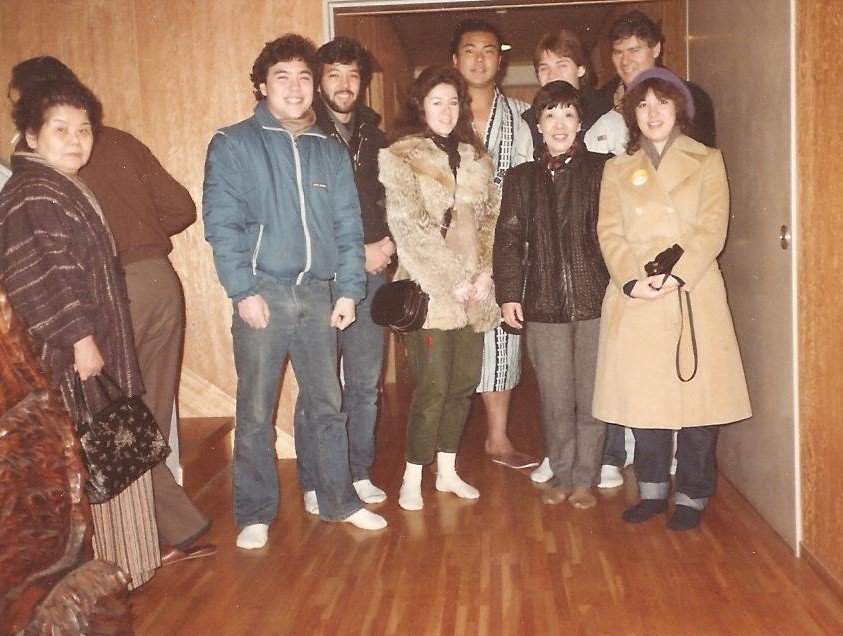
Chiyonofuji
Like all sumo wrestlers, he lived and trained at a so called “stable” in Tokyo and I was fortunate enough to visit once, together with a group of family and friends. We were allowed to sit at the edge of the training hall and watch their morning routine, and Chiyonofuji was amazing. Despite his size, he was able to do the splits and we were fascinated to see his training methods. Afterwards, he graciously came to say hello and allowed us to take some photos. It was a day I’ll never forget!